SUBSCRIBERS’ HOME / UPDATES / FEATURES / NEW TO HOME EDUCATION? / PRACTICAL MATTERS / WEBSITES / RESOURCES / SEN / PLACES TO VISIT / SOCIAL LIFE / USEFUL INFORMATION / TUITION AND SERVICES / FROM YOU TO US
Juggling acts
Try as I may, I can’t seem to get the balance right between happy children and a clean, tidy house. Bear in mind that these young ones are my second family, I now have two children of 19 and 16 and two step-children of 24 and 21, so one would imagine that, given the years of experience, I also have all the answers. 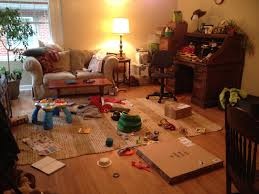 Alas, alas, alas. If the vacuum-cleaner is out then the arguments are also in full swing, if the ironing has started then there is inevitably one child wrapped around my legs asking for mama milk, a biscuit, a story or her third change of shoes for some game or another and the other is mind numbed in front of the television. How does anyone else get this right? How can we be happy home educators with at least semi-orderly, odour-free homes?
‘I do it all after they are in bed’ explains my friend Beckie. ‘I don’t speak to my husband, I hoover, wash, iron and dust and then collapse into bed knowing it will all begin again in a few hours.’
‘I have a schedule which the children are now old enough to be aware of’ answers Natasha. ‘Mondays I change the beds; Tuesdays I vacuum upstairs and clean the bathrooms; Wednesdays I dust; Thursdays …’ my concentration fades as I think of my own sun-bleached, unread, schedule on the overloaded (and very dusty) noticeboard behind the kitchen door.
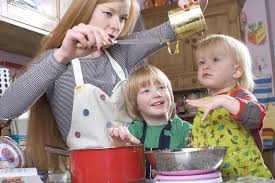 ‘I realised the other day that when I ask William to tidy his room, he actually doesn’t have a clue how to go about it.’ muses Karenza, a home educating single parent of two. ‘I remembered back to the time when I first left home and I lived in a community in the Netherlands and we were all expected to keep the house clean and to cook by turns and share in gardening chores. I had no idea how to do any of the tasks that the others seemed so competent at. No one had ever shown me. I was cared for by my father as I grew up and if he ever cleaned the house or cooked meals I have no memory of it. I had not been taught, had not observed, therefore I was totally in the dark. So, how can William know how to clean his room if I don’t show him how? I am still grateful today for the women who showed me how to thoroughly clean a bathroom, cook some basic, healthful meals and organise my belongings. I am determined to help my children to learn all these life skills as part of their home education.’
Karenza’s solution has some appeal for me. I like the idea of the children heading out into the world able to care for their immediate environment as well as having an awareness of how their personal choices might impact on the world environment. Perhaps, so far, I have been far more careful to ensure the latter than the former, perhaps, without ever considering it, I have bred mini vacuum/washing up/mopping artistes (should that read servants?) who are waiting in the wings simply for permission to get started?
Classrooms in many Japanese schools are cleaned by the children and, it must be noted, the teachers, who use them. The toilets are throughly scrubbed, the outside spaces also maintained. Maria Monetssori was also an advocate of facilitating the learning of home care tasks. Most Montessori classrooms have a  child sized dust pan and brush, iron and board, washing line and pegs. Children are encouraged to take the time to finish a task completely by tidying it onto its specified tray and replacing it on the child-height shelving. She wrote: ‘The human hand, so delicate and so complicated, not only allows the mind to reveal itself but it enables the whole being to enter into special relationships with its environment. We might even say that man ‘takes possession of his environment with his hands.’ His hands, under the guidance of his intellect transform this environment and thus enable him to fulfil his mission in the world…
‘The first intelligent moving of these tiny hands, the first thrust of that movement which represents the effort of the ego to penetrate the world should fill an adult’s mind with admiration. But instead he is afraid of those tiny hands stretching out for things that are of no value or importance in themselves, and he strives to keep them from the child. He is constantly saying ‘Don’t touch!’ just as he constantly repeats ‘Be still! Keep quiet!’’
I take some time to think. Is it possible for a two year old to actually, stretch out those cute, chubby little hands and effectively, wash up? Where will my five year old, with his slightly bigger hands, put the hoover once given free rein on this very interesting, gobbling machine? Are there reasons I have not thought of this free housekeeping service for myself, or reasons that Karenza mentions the idea now, when her children are 11 and 14?
I guess the answer is that, like all natural, family learning, the most success will be had when selecting tasks appropriate to the interest and ability of the child. My two year old daughter can load a washing machine and hand damp washing to a person with more height, a line and a bunch of pegs. My five year old son is capable of wiping wet crockery with a dry cloth and moving most of a pile of dust into a dustpan, but I wouldn’t give him a full bucket of water and a mop or her full access to the buttons on the washing machine unless we want everything to be stuck on rinse hold for forty years while Noah builds an ark capable of floating across the flooded kitchen to regain power over the Vileda. Like everything else, the real answer has to grow from knowledge of your own children and that small element of risk that enables them to learn in an environment that fosters trust and confidence.
 I think my greatest challenge will be to find the time to allow them to attempt to help in their clumsy, slow, inept way. I know, that last sounded horrible, judgemental and like the words of an overstretched perfectionist, but hey, I do, like you, have an awful lot on my plate. Do I honestly have time to help them learn to do housework as well as read, write, configure the rudiments of mathematics, build a lot of lego constructions and sculpt play dough? Is this just another thing I have to fit in instead of a relieving of the burden? The answer is undoubtedly yes, it is. It will be slow, painful to watch, awkwardly achieved and incompetently finished. I may have to (perhaps secretly) re-do a lot of tasks and suppress my sighs when we are late yet again because hanging out the washing took more than an hour, but isn’t that what home education, or natural family learning is all about? We are all learning together, the small people working out their brains on the activities and all-new world of everything-there-is, while we hone our patience, mildness, hope, trust, loyalty, kindness, self-control, love and, yes, joy. So, wish me joy people, joy of the ever-extended housework-as-learning-adventure! The only question that remains is will we ever again find time to pick up a book?
© Melanie Crocker-Hulse