SUBSCRIBERS’ HOME / FEATURES / NEW TO HOME EDUCATION? / PRACTICAL MATTERS / WEBSITES / RESOURCES / SEN / PLACES TO VISIT / SOCIAL LIFE / USEFUL INFORMATION / TUITION AND SERVICES / FROM YOU TO US
Spontaneity or planning
As regular readers will know, I am a great advocate of delight-directed learning. This means that we, as home educators, use to the full our unique opportunity to allow our children to guide their own learning as much as possible by encouraging, facilitating and supporting the natural ‘fads’ that most children, and adults, experience in their enthusiasms.
Following the general experience of most people, humans tend towards ‘crazes’, switching, that is, if you were me, between knitting, knitting, knitting to sewing everything in sight, to transforming the kitchen into a mini brewery with kefir grains on every surface and kilner jars jam packed into the fridge. I’ve just moved through a big raw chocolate learning curve. I won’t lie, I still love it, I just don’t seem to need it in the same way I did a fortnight ago.

But, this approach to learning, as natural and life-long it is, is a complete logistical and practical impossibility in schools. This is in part, where schools fail. If Jon is all about Maths this week, it is impossible to allow him to proceed supported with his craze while Claire paints, Zack constructs Meccano cranes, Caroline writes short stories, Wendy watches inspirational You Tube videos about scrap-booking, Allan reads a book, Hayley creates chemistry experiments and Helen swims. You get the picture, continue thus for thirty or more students. There is most likely only one teacher and if they are lucky, one classroom assistant. They cannot allow delight to take over. In fact it would look like mayhem, and the sit down, put your hand up, wait to be asked before you speak, stand in a line, don’t run rules of school are all about avoiding mayhem. The result is that for most of the day, every day, most children will be attempting to learn something they have absolutely no interest in, and, possibly as a consequence of this situation, absolutely no use for. After all, if most of your time is spent being forced to do something that you do not enjoy, or even hate, who will choose, when given the freedom to do so in later life, to do that very same thing?
But, at home we can be different. We can allow and encourage learning phases and rejoice in the excitement as our young ones take greater and greater steps into their passions. But is it all joy?
My son is six. He, it would seem, loves ‘stuff’. As much as I would like to indulge his every whim, and have until very recently tried to do so, it has come to my attention that if given free rein to choose what he would like to discover in delight, it invariably involves a great chase over to Penzance or some other similar shopping destination to buy a book, borrow a dvd, search out a specific pen, purchase special ingredients or find the perfect red, blue or green notepad in order for him to be able to proceed with his next epic novel, discovery, design, recipe etc. Thus, most of the day later we arrive back home with said items, having spent far too much money on petrol, parking, lunch, drinks, a toy that was in a charity shop that we just had to pop into while we were passing and something for tea in Sainsburys that we don’t have at home but really fancy. Now, the day almost done, tiredness looms, the neglected pooch needs a pee and a decent we’re-sorry-we-went-out-without-you walk, we need to manage at least a few pages of reading, him to me, me to him; then they are hungry all over again and our shopping is still in the bag waiting for actual use for the project that was so exciting pre-purchase.
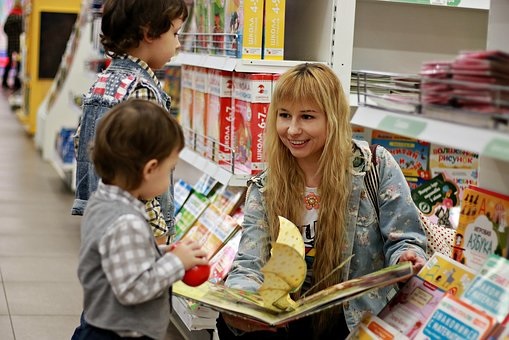
I hate to pour cold water, especially on a six year old, but this cannot carry on. Brought up short three weeks ago by the death of my car, I have been shocked at how alien it feels to just stay at home learning (and how much money I have saved). I have even started to wonder if all along I was being taken for an avoidance ride and that he understood my desire to facilitate his intentions so very well that he enticed me into the same trap time and again. I mentioned this at breakfast today but in all honesty the only bit he chose to hear was the mention of going out to which he interjected excitedly ‘Can we? Oh wow, we haven’t been anywhere for ages!’
So, I guess the tip here is learn from my mistake right now! If the prospect of creating school at home typifies the exact reasons why your little ones are NOT in school then you will have sympathised with my introduction. But do take some time to think about it and get the balance right, from the start if you can. It is possible to enable learning as well as enable concentration, dedication and planning skills as well as supporting spontaneity when appropriate too.
Brilliant … young Polly would like to write a recipe book – what style book will it be – for example. for adults or for children? How will she order the recipes – by meals or by seasons or by ingredients? How will it be illustrated? Which recipe books does she admire already and how will hers be different? By taking some time to plan you will not only encourage her to consider the project more carefully and possibly to improve the results as a consequence but it will also help her to see the vast amount of work that goes into producing something such as a recipe book, the massive variety of styles that there are and understand the way books are marketed. If this feels little like taking her sweet, delighted idea and sitting on it until it’s flat, here we have my predicament. However, there is also the small possibility that in actual fact Polly is just a little hungry and wants to make some currant buns and a little digging will uncover this; twenty minutes later the buns will be ready to munch, warm from the oven, and another abandoned project has been averted and all that time and petrol money saved.
I asked some other, much wiser, home educating parents how they manage the problem of impassioned project beginnings:
‘I think it’s very natural to be carried away with an idea at first and then feel it wane, so I don’t worry too much. We have a core of subjects, projects and learning tasks that we complete each week with plenty of time for extra, spur of the moment ideas in between. As long as I feel that we are on top of our ‘core’ then I don’t stop the running hare of delight’ says Carole, mum to Heather and Penny aged 10 and 12.
‘I have a tendency to get excited at every idea too.’ explains Julie, mum to Vivian age 9. ‘He wakes up with a thought, dream or plan filling his head and we’re off! I used to get distressed that at the end of each week or month or year when we hadn’t covered half the subjects and topics I had planned but now I keep a diary of what we do actually achieve and I feel that it is far more varied and interesting for the spontaneous projects, trips and experiments that we create than it would be if we stuck only to the structure that I decreed.’
‘I set aside one day a week for an ideas day. The rest of the week, if enthusiasm for a certain project crops up, they write it in the Ideas notebook and then on Friday they are free to carry out their dreams. This means I have time to source whatever they might need more cheaply, online perhaps, and to research any extra paths their project may lead them onto. I usually take a trip to the library on a Thursday so that we can gather books or a dvd and other items ready for Ideas Day. We don’t attempt any formal reading, writing or maths on Fridays as it’s their day to have their say’ says Pete, father of Emily (10) and Rhos (5).

So, if you feel that you may be alongside me on the delight-directed roller-coaster and are regularly watching your time and money drain away into yet another unfinished project, perhaps some of the above advice will be useful to you. The key is to find a balance between respecting the fads and crazes of genuine learning and injecting said learning with a good dose of dedication and a finish-what-you-start ethos. Whether this involves scheduling, diaries or Ideas Day is up to you. I think I might need all three, if I can find them under all these half-finished modroc crocodiles…
© Melanie Crocker-Hulse