SUBSCRIBERS’ HOME / FEATURES / NEW TO HOME EDUCATION? / PRACTICAL MATTERS / WEBSITES / RESOURCES / SEN / PLACES TO VISIT / SOCIAL LIFE / USEFUL INFORMATION / TUITION AND SERVICES / FROM YOU TO US
Another Voice
As home educating parents we may have literally more hours in the day with our children than those who send their offspring to school, but I have sometimes felt that somehow, I have less voice. For example, I do not get to shout sternly across the room ‘Err, you there, is that gum you are chewing during my lesson? Out, stand outside the room, get out…’ or ‘This homework must be done and handed in by Monday noon at the latest or there will, I repeat, there will, be consequences…’ and, of course, I would never have wanted to (well, only a little bit). But to have a little of the authority that being a stranger, an educated and paid professional there purely to impart valuable knowledge brings, would at times have been a blessing.
I can remember when my daughters, now 18 and 15, were younger and enjoying a particularly interesting project. We would all spend hours of each day talking about and planning and making the various elements of it come to life until suddenly, there, that’s it, for them it was done. Gone, over with, boring, uninteresting, dull. How can this be I would wonder, bewildered; I was enjoying it all so much and now … what? At school, I assume, a teacher would muster all her authority and insist on the Vikings project coming to an end on a Friday afternoon with all work tied neatly into a folder, painted shields on the wall, completed poems, illustrated and mounted on sugar paper and presented in assembly – whether the small Viking poets liked it or not. Lacking sugar paper and an assembly as incentive, quite a few poems were never completed in our home, many a project lay abandoned and despite my personal enthusiasm, no Viking shields were ever painted and put upon the wall.

Is this situation a failure? What can be done to ensure that this lack of dedication displayed by the darlings does not ruin potential careers that may require years and years of devoted study and personal application? Is authority more important than friendship even in a home environment?
Let me start by saying that, in case you haven’t noticed yet, I am going to be biased here. I do not feel that I failed at home educating my older daughters, despite their incomplete knowledge of the Vikings. Yes, as parents we tend to choose subjects and projects that we personally feel some sort of connection with or enthuse about aspects of educational expression that we enjoy ourselves and sometimes this in itself may prove to be the key. Was it really us, the parents, who wanted to study the Romans in the first place having been sick when everyone else got to visit Verulamium on the school trip back in year 9? How much choice are we giving our children, how much of their delight is really involved in directing their own learning?
Let’s face it, while learning doesn’t stop at 18, those beyond that age very rarely spend inordinate amounts of time learning things they are not excited about. We pick, we choose, we unpick and back track; we allow Greek vocabulary to fade from our lives along with the memories of that delectable tanned demi-god we met while plate smashing in sun soaked Corfu; we leave the demijohns empty and collecting dust at the back of the shed where in our imagination large stocks of potato vodka or parsnip wine once stood; the pottery wheel rusts in the garden, the rocket goes to flower, the beetroots harden and the half finished willow baskets crumble to dust. John Seymour may have absorbed several weeks of precious reading time, but the reality of the outworking of our enthusiasm may not last even that long. Forcing children to complete projects that have lost their shine is the same as forcing ourselves to continue in a diet of Greek willow weaving and tough rocket salad. Unfair, dull and whilst disciplined, rather unpalatable. A little dressing of ‘finish what you start’ goes a long way, and essentially, in my experience, it is not worth the agony of the moment or the very real sense of failure when they still hate any hint of a foreign language at sixteen because of the feast of French inflicted on them at six.
As discussed in another article, children, and in fact adults learn naturally in a rather spasmodic fashion. Mania for this, obsession for that, then….drum roll… all done! So why not try to use this to your advantage? Grab the chance of a few weeks of maths, history or rocket science then let it go. Go all out for the Victorians and then put them away. Do not weep, it’s like that Greek – wonderful for a time, but then done. Try to make plans for a short space of interest and judge how your children seem to be reacting as you go along. Don’t promise yourself the Viking shield after a month, get painting after a week. If they are still crazy for more then start stories, diaries, poems and digging for hack silver and bring them down to Falmouth to sit in a real live longboat or plan a trip to Norway. Lower your expectations to avoid disappointment, shorten your view.
I used to run creative writing classes for home educated children. The group altered in numbers weekly between ten and almost thirty children of varying ages, but nearly every parent there brought their children along because ‘I can’t get him/her to do anything like this at home’. What was lacking? How could I help them to succeed where their parents reportedly did not? Short answer, I don’t know, but that brings us to the second point of this article: sometimes we, the parents, are the wrong guide. I hate to say it, as anti-professional as I am, but sometimes children do seem to need another voice. I am not saying that any other voice will do by any means, but just that there is something to be said for taking them along to a group or class of some sort and staying out of it. Whether it is that praise from a virtual stranger is a better incentive, or the change in atmosphere created by being somewhere new, or the enthusing of someone who hasn’t enthused your ears off for your whole life, it could be one, none or all three. Try it – seek out workshops at museums, NT houses, lectures at libraries or free short courses in colleges or online. Or, alternatively, do what I did and start a group yourself and watch everyone else’s children create marvels while yours stare at the paper.
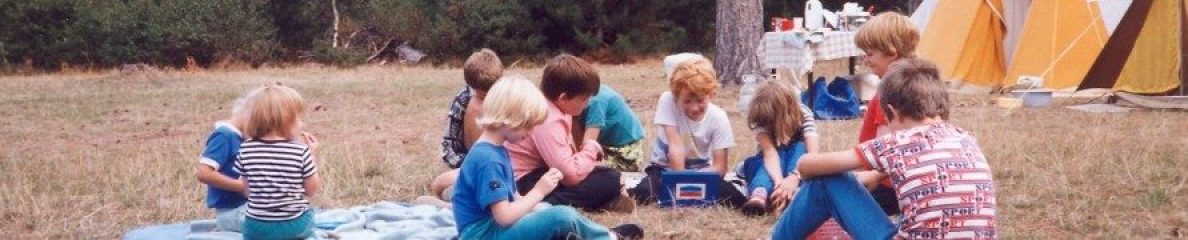
The third, hopefully helpful, point also involves getting out of the kitchen and finding a group, or at least a willing friend or neighbour or two. Doing things with other people, whatever things they may be – painting, writing, making notes, playing music, singing, composing, sculpting or weaving in a group creates a sort of enthusiasm that grows and grows. There is a type of competitive spirit too that seems to smoulder under the surface, unacknowledged and subtle but healthy and inspiring at the same time. So, if you really are determined to complete a project, get some friends over to all work together. Or better still plan the final piece of work as a group effort – make a floor sized magazine mosaic or paint a Viking sail rather than shields. Other home educating mums will love you for including their charges in your inspired ideas and may even bring cake, your children will think it’s fantastic and they’ll get a chance to show off what they have been doing and all those amazing things they have learned and the borrowed children will think you are the best HE mum ever for letting them all get covered in paint and high on sugar and run naked around the garden leaping over your archaeological excavations. Win, win, win.
Whatever you do, do not feel alone in getting tired of your own voice. It happens to all of us and if you are tired of it then the children are bound to be too for time to time. Home educating is all about lovingly taking on or continuing the role of primary information source or education facilitator for your children. Don’t scare them away from their vision of you as a friendly guide by ‘turning teacher’ and getting out your Captain von Trapp whistle. Try out the suggestions above, enthuse and delight in learning yourself, set the best example you can and be on their side even when your heart longs for them to mount everything on sugar paper and pin it neatly on the wall.
© Melanie Crocker-Hulse