SUBSCRIBERS’ HOME / UPDATES / FEATURES / NEW TO HOME EDUCATION? / PRACTICAL MATTERS / WEBSITES / RESOURCES / SEN / PLACES TO VISIT / SOCIAL LIFE / USEFUL INFORMATION / TUITION AND SERVICES / FROM YOU TO US
Obsessive, compulsive learners
There are some aspects of a natural childhood that can be obscured or altered by school attendance that shine all too clearly when your child does not attend or no longer attends school. Real, enthused and genuine interest is all too commonly one such, which is very sad, but of course there are others too.
I was educated in school so can personally vouch for the fads that take playgrounds, canteens and common rooms by storm at periodic intervals. I can remember teachers being driven mad by Care Bears; confiscating embroidery silks which were secretly being woven into friendship bracelets below the desk during silent reading; banning French skipping games and laughingly shaking their heads over our scrunchies, quiffs and Heather Shimmer lipstick. Trends, fashions, pressures, crowd or herd mentality – what drives the craze of the month? Why do they seem to incline away from the purpose of school, which is the learning that is expected of the inmates who would really just prefer to be doing tricks with yoyos?
It is my experience, and it seems that I am not alone in this, that the home educated child still becomes obsessive about various things. To be honest, I still become obsessive about things: just check out my collections of yarn, felting wool, fabric and embroidery hoops for confirmation. And ‘Oh, are you asking about the dress our baby is wearing? Oh yes, thank you so much, I did make it. Hmm, and that one, and that one, and that one. Yes, they are all from the same pattern, yes I did make them all, yes, all in one night.’
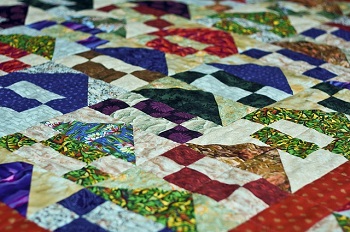
It’s not just me: ‘I can’t stop making patchwork quilts,’ laments my usually very normal friend Sally, proffering one for my inspection. It is meticulously worked with invisible stitches and the most gorgeous fabrics, yet ‘ I have no where to put it and no one left to gift it to … they already have three each.’
‘Would you like to come to tea?’ offers Izzy, a very sane lady who lives a few fields away from us. ‘ I found a new recipe I would like to try out, so come and see what you think.’ Cue the consumption of a mass of whoopee pies of varying hues and flavours with some to take home, some for our neighbour, some for a great aunty twice removed. You get the picture? Of course you do. You are the same, too, aren’t you?
So, how does the home educated child differ from the school educated child in these passions that may or may not last a lifetime? It seems to me that the delight of the home educated, free-to-choose child is much more likely to land on something that we would usually consider to be quite a traditional subject that must be taught, is taught, from the front of a room with a blackboard as backdrop. There must be a reason for these building block subjects, somewhere underneath all that resented, forced, grindstone learning, and I hope I am not being presumptuous in saying that the three Rs still form the foundations for common, socially accepted life. If, then, a child growing up in our western culture detects this, how naturally and eagerly they will embrace their own need to learn and understand. Just as the crawling baby begins to haul herself up onto those impossibly tiny feet, to try to balance and walk upon one of the smallest surface areas of the body, because that is what is happening all around her. So she will also explore books, words, writing and mathematics with that same dogged devotion. When the time is right, when she feels compelled, when to her, it becomes a craze.
I can remember my eldest two being maths obsessed, individually and at completely different times. For weeks it was all they wanted to do – forget baking, reading and making. Maths, maths, maths. Then they grasped it and there, it was done. No more maths. That was the time, like my own short burst of wearing French plaits, to do that. Then something else comes along and the house is filled with fresh pasta strips drying while the next batch is rolled out and the latest version of Neapolitan sauce bubbles gently on the stove.
What I am trying to explain, and illustrate, is that obsessive, faddish, craze-y behaviour is perfectly natural and wonderful and one of the greatest learning tools that we have in our arsenal of instincts. Watch a baby learn a language: they have a full comprehension by six months and yet most do not say very much at all before a year and will still be increasing their vocabulary very evidently at four and five years old and more ruminatively for the rest of their lives. Do we criticise this obsession, scorn or mock or put it down? No, language is deemed useful and we actively encourage our baby to try out what they understand, even naming ourselves dada, mama and nana in order to give meaning to their first vocalisations.
‘My daughter won’t stop with those number rods,’ worried one home educating mother to me recently. ‘She starts first thing in the morning, sorts them all how she wants them but then will keep coming back and rearranging the patterns, making new amounts and combinations. I’ve tried to get her interested in other things, even offering to buy her new craft equipment, but she just doesn’t want it. I feel kind of embarrassed by her obsession. Do you think there is something wrong with her?’
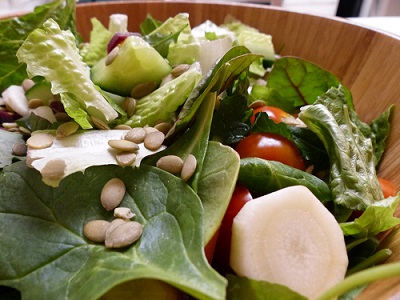
Another friend of mine regularly posts photographs of her daughter tasting wild plants. ‘She is crazy about foraging. Asks all the time if she can eat this or that, can she try it, just a little bit. Could it be cooked, what would it taste like if we added x or y. She pores over books on wild plants, brings home samples, researches for hours and creates all sorts of salads and savouries with her finds. Do you think she’ll be a cook when she grows up? Should I try to get her to stop or steer her away from doing the same thing over and over again? I’m not sure it’s healthy.’
Playing the guitar, speaking Chinese, singing or baking whoopee pies, whatever it may be, my advice is to let it be. A learning delight is an amazing and wonderful thing to witness and one we hope will overtake our offspring from time to time for the rest of their lives. Wonder weeks and growth spurts – the learning leaps so admired in the very young, continue in the naturally raised child for many, many years, maybe for ever as they strive to grow their minds in wisdom and understanding. There may be the odd unfortunate brush with a mullet hairstyle, Cleopatra eyeliner and puffball skirts to survive on the journey too, but do not despair. Take a photo, look at it with love and revel in the confidence and security that your experimental and wonder-filled child enjoys; then plan all the exciting and making-the-most-of-it trips and adventures, projects and experiments you will enjoy together when that love affair with hairspray is overtaken by a passion for history.
© Melanie Crocker-Hulse