SUBSCRIBERS’ HOME / FEATURES / NEW TO HOME EDUCATION? / PRACTICAL MATTERS / WEBSITES / RESOURCES / SEN / PLACES TO VISIT / SOCIAL LIFE / USEFUL INFORMATION / TUITION AND SERVICES / FROM YOU TO US
A question of entitlement
One of my primary goals when I chose to home educate was to give a better, a real, childhood to my children. I couldn’t bear the thought of them being, as I 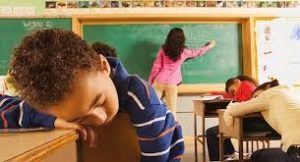 had been, imprisoned in a classroom sunny day after sunny day, through frosty, misty autumns, crisp winter snows and jubilant, lamb-filled springs, staring out of the windows longing for fields and grass, sand, sea, trees, flowers, animals, a good book. I wanted them to learn in an environment which I believed fostered real learning – a safe and loving family home with an inextricably close connection to the natural world. I wanted them to write the poetry of their hearts, paint when a genuine love of painting came over them, read and read and read and talk freely to one another and to me, ride bikes, climb mountains, explore. My genuine, instinct-led decision to home educate was born of love, so where could the danger be in that?
Sadly, love, in the form of giving and self-sacrifice, is not the only answer to all questions. Even the, perhaps especially the, unconditional love that pours from most parental hearts, must be intertwined with wisdom too as is evident from recent laments that have reached my ears. Apparently, we live in the age of the entitled child, the entitled teen. An age where each possession, each responsibility, each privilege is no longer earned but due, by some dint of mere existence. Nothing is good enough for more than the first ten minutes, nothing much earns even begrudging thanks, nothing is merely desired but always ‘needed’.
I may not share the opinion that every child or teen is as described above but I have to agree that there is a definite leaning towards ingratitude at every level. One parenting expert, Amy McCready, blames poor parenting: ‘The entitlement epidemic usually begins with over-parenting—over-indulging, over-protecting, over-pampering, over-praising, and jumping through hoops to meets kids’ endless demands,’ she says. ‘Today’s generation of parents are overly invested in their child’s happiness, comfort and success.’
Thinking on those words led me to wondering if it could be that we, as home educating parents, are perhaps even more vulnerable to the possibility of producing an ‘entitled’ child? Are we, by rescuing little Jonny from his unhappy school life or allowing our barefoot, unfettered toddler to develop into a barefoot, unfettered teen without so much as a sniff of school, falling into the over-parenting bracket? Are we trying too hard to make our children too happy? After all, the very reasons that some of us have come to home education – over-populated classrooms, over-stretched teachers, over-tired children, over-stressful testing regimes, over-confining curricula are all aspects of modern life considered, by some, to be normal and by others as multiple ways of ‘keeping the people down’ or controlling the masses by inflicting unhappiness, insecurities and a lack of self worth upon the clay-like material that is the child’s mind. Could it be that by side-stepping those very bullying but potentially character-shaping elements of early years learning we are in fact breeding another problem for ourselves, the child/teen/adult who thinks he is king?
 Certainly giving of oneself, enormously (and intensely satisfyingly), is involved in the home education route. And there is no way that we can pretend that it isn’t, even to our children. They are watching, eagle eyed, as we abandon stirring a sumptuous soup to agonise over a mathematical problem or extricate ourselves from our knitting to help make an exploding volcano from bicarb and vinegar. They know that we loved our job, had a very full social life, read/painted/walked/worked out far more in our ‘life before’ than we can even think of now. They see us tirelessly, and tiredly, giving of ourselves day in, day out, albeit out of real love, and perhaps, entirely subconsciously, their idea of their own importance is racheted up little by little every time, all the time. There is nobody who is going to put thngs into perspective, ‘take them down a peg or two’, ‘give them a dose of the real world’ – thankfully, because that is why we home educate, right? But how can we, not as yet another service we perform, but rather with a new awareness, a new consciousness of this potetial issue, help our children keep a healthy perspective on self-worth and thus avoid becoming unhappy, discontented and ‘entitled’?
After listing warning signs which can help parents detect if their child is heading down the entitled road, McCready goes on to write ‘Overly involved parents helicopter their kids’ every move and mow down the potential obstacles in their path.’ She adds: ‘In our attempt to shelter our kids from adversity, we rob them of the opportunity to make decisions, learn from their mistakes, and develop the resilience needed to thrive through the ups and downs of life. This is all done in the name of love—but too much of a good thing can result in kids who always expect to get what they want when they want it.’
Perhaps that description would be a good place to start. While potentially lining ourselves up for a greater likelihood of producing an ungrateful child, as home educating parents we also have a far greater capacity for preventing this tendency. Our classrooms are not governed by health and safety regulations that can smother and restrict. Our days are not confined to desks, or our energies to recording and reporting with little or no real experience. Every time we take our children to the beach, park, woods, castle, or simply let them run into the garden in the rain, we have the chance to allow them to be, to take risks, to not be hovered over like princes and princesses. We can watch their progress in problem solving, meeting adversity and developing resilience every day in small or large ways, in natural ways – the burned cake, collapsed-den-roof, nettle stung, muddied knee ways. We make a choice when, where and if to clear up after them or to help them to do so for themselves; we have the chance to watch their mistakes and talk through how they could have done better to achieve the outcome they intended; we are there in triumph, and we are there in disaster – and there to demonstrate how to ‘treat these two imposters both the same’. We, the parents, are allowed to say no without fear of being accused under law of some innate and disgraceful prejudice. We can teach the gracious handing of disappointment as well as we can model gratitude, good manners and humility.
So, go ahead on your happy home-edding road – stride in confidence and in love with a few practical preventions thrown in. The ‘entitled’ child in the room is not necessarily the home educated child.
Practical Suggestions
- Include gratitude in your child’s everyday practice – prayer, thank you cards, a conversation, a gratitude note or diary.
- Refrain from hollow praise: children see through it anyway. Rather, discuss things your child likes or doesn’t like about an outcome and ways to make improvements. Praise genuine effort not results.
- Avoid hovering over a child who is stretching themselves physically or mentally.
- Include your child in practical, everyday tasks which are involved in their care – making lunch, hanging out washing, drying dishes, setting the table, tidying toys or crafts away.
- Allow them to feel disappointments, be sad, own that sadness and move on. Comfort but avoid cossetting.
- Allow a teen who is earning, even just a little, to contribute to household expenses thus reaffirming that their place is earned and that their contribution is valuable.
© Melanie Crocker-Hulse