SUBSCRIBERS’ HOME / FEATURES / NEW TO HOME EDUCATION? / PRACTICAL MATTERS / WEBSITES / RESOURCES / SEN / PLACES TO VISIT / SOCIAL LIFE / USEFUL INFORMATION / TUITION AND SERVICES / FROM YOU TO US
Learning languages
I recently became aware of a sizeable Lithuanian population in isolated communities in rural farms in west Cornwall, an area close to where we live. I regularly undertake a voluntary teaching work which requires that all individuals of all ages and languages from all cultural, social and economic backgrounds are contacted, ideally face-to-face, to be offered learning opportunities. Thus, our local Lithuanian ‘tribe’ was discovered: keeping house; picking daffodils; cutting cauliflowers and very happy and willing to talk with us, only for the most part, in Lithuanian.
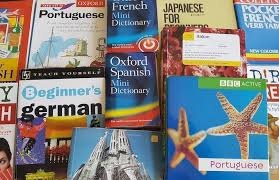 Lithuanian is not French. I do not have an A level, holiday conversation or even an embarrassing smattering of Lithuanian. Nothing at all, it would seem, to pull out of my very dusty ‘language cave’ that lurks somewhere at the back of my brain. I can feel it aching as I write, easing stiff joints, stretching curled fingers, unused to the light. I opened my mouth, you see, and discovered that only Romance languages stuttered over my lips. Even the small two years spent learning German at the hands of an unkind and very dull teacher, had deserted me. Red-faced, I retreated to think things through.
There are all sorts of websites out there, even some which offer to teach anyone who cares to take a few minutes, a few words of Lithuanian. Incomprehensible for the first three tries, then merely strange, morphing next to relatable and onwards to pronounceable, recognisable and comprehensible. Suddenly I had Hello in Lithuanian, a language full of throaty exclamations and odd punctuation, nothing at all like French. The word for thank you sounds like a polite sneeze.
The painfully slow progress that I am making in the uncovering of each and every word of very first, baby steps in Lithuanian is here belied by my description. And the reason for that is that I discovered how happy it makes me to gather new words, to taste a new language and experiment with its sounds, attempting to roll out each syllable with pleasure and ease. Alone, I try to sound genuine in my greetings, to be sincere in my goodbyes. Were I to meet a Lithuanian tomorrow I would no doubt stumble my way through a very red-faced ‘good morning’ but tucked in the warmth of our storm-battered home, with the company of my non-judgemental Surface Languages Lithuanian man, I am a pro!
I have often been asked by fellow home educators what my approach to language learning and teaching is and I must say that my answer has changed with the years. As a new home educator I felt sure that given the time, space and encouragement my accomplished little ones would be speaking Spanish like the natives who surrounded our home, then in Seville; fluent in French, if only for fun, and at least holidaying with confidence in Italy. The trouble is that children have minds of their own and the days, well, the days just pass don’t they? When did we find the time for all that language practice, all those verbs and conversations? The truth is we didn’t, and my children didn’t want to and so I didn’t bother and then they were teenagers who didn’t speak anything but English and who didn’t mind because ‘the world is in English anyway Mum’ as the eldest of them once silenced my bemoaning.
My eldest is almost 20 now, away at university and busy with her own interests. Whilst being educated at home she never even mastered ‘Please would you tell me the way to the town hall’ in French and hated every embarrassing moment of trying after I found a GCSE French study book in a charity shop and presented her with it, with the idea of happily occupying at least one of her rather lazy afternoons. Interestingly however she did spend a large portion of last summer away in Portugal with friends. A week or so after arriving she called to let me know that she had was there safely and was ensconced on ‘her’ balcony after having made soup. I tentatively enquired where the ingredients for said soup had come from only to be told that her ‘Portuguese was progressing very well’ and that the phrase book she had apparently taken with her had now been abandoned in favour of a much meatier tome. ‘It’s quite easy really Mum, you just have to read it and remember it and then say it. I would have learned French in no time had you told me that!’
Well, if only I had known that she was such a naturally gifted linguist… but, in reality, aren’t we all? We are all born small sponges, as they say, and so we remain. Within the first six months of life we have our native language learned. Admittedly getting our tiny tongues around the pronunciation of most of it takes a little longer but when Wilde, now two and a half, struggles with a new word she has a very fine attempt and then uses 30 words where the one she wasn’t sure of would have done. For Wilde at her age that is considered normal. Inside each and every one of us is that small person who needed to tell others what they wanted, what they hated, how they were feeling, their thoughts and dreams and desires. Necessity bore some of the weight, for sure, but here is the fact: we can all learn to speak any language we discover, if we want to. There is no such thing as being ‘good’ or ‘bad’ at language learning; by far the majority of us just can and do and will learn.
wave family that I am blessed with home schooling. Break down the barriers, or smooth them over when they threaten to rise. Show no fear: try a few words of Maori, Icelandic or Chinese just for fun. Learn to sing a song in Dutch, a joke in Swahili, count in Polish. Laugh at your own mistakes but let your children see you try and fail, try again and again and let them see you enjoy it. Be brave, take on challenges for yourself and sweep them along for the ride. Stretch your own linguistic limbs and see if they can resist pirouetting after you, even if it does take a number of years for them to admit it.
So, I shall persevere with the gathering in of my smattering of Lithuanian. I listen, repeat, listen again and imagine the delight on the face of the next native speaker I meet who had mistaken me originally for that same speechless clod of Cornish earth where he cuts daffodils all day. I hesitate to draw an analogy with the rising of a new spring (I am, of course, far too young for that one) or the surprising trumpets of new flowers which currently announce with almost verbal confidence the beauty of our coastal sweeps (I don’t wear yellow either) but might I suggest that the breaking through of those brave bulbs, cracking the clay where the south-westerly winds first slap England’s cheeks, is inspirational in a way that shrinks the leaping of a simple language barrier into the non-event that it is. Really.
© Melanie Crocker-Hulse