
SUBSCRIBERS’ HOME / UPDATES / FEATURES / NEW TO HOME EDUCATION? / PRACTICAL MATTERS / WEBSITES / RESOURCES / SEN / PLACES TO VISIT / SOCIAL LIFE / USEFUL INFORMATION / TUITION AND SERVICES / FROM YOU TO US
On earning and learning
My eldest daughter phoned today to give me an update from the coal face of her latest waitressing job. She is at university but keeping her living expenses manageable by working in a variety of paid roles – about five to date. I am proud to say that she has always been a hard worker, willing to graft at the most awkward jobs to earn anything from pocket money to enough to pay for a few weeks foreign travel.
Work was always something that worried me as a home educating parent – would my children manage to find work without the pre-requisite GCSE results to parade? Would they present themselves as employable with little or no experience of larger institutions? How could they prove their potential if no one would let them past the first stage because of their lack of conventional schooling – had home educating them led to an enormous disadvantage for the future?
Speaking with several other home educating parents this week, I discovered that I have not been the only one to worry: ‘I was petrified that my eldest would never find a job” recalls Jo. “She was fifteen when she planned a trip with another family, but she had to pay her own way. I said she could go but that she must earn the money that she needed, and then chewed my nails off for three weeks while she looked, unsuccessfully, for work. I felt so mean, mentally oscillating between my original firm instructions and just handing over the cash, hated all the people who turned her down just for being young, inexperienced, a little shy, a bit different or not being a pupil at the local school. Finally, just as she had  settled on the idea of making and selling beaded jewellery out of the local market, she landed a babysitting job three evenings a week which really turned things around. I think we both learned a lot from the experience though and I plan to do things differently with Alfie who turns fourteen this summer and has been murmuring a little about finding a job.’
‘Kate has been thinking about earning some money for herself this summer but doesn’t really know where to start. She is sixteen now and hasn’t had a job before, I’m not sure how to, or how much to, help her,’ explains Julie, a home educating mother of three. ‘She seems a bit mystified by the whole process, and it’s not as if she can go to the Job Centre as she just wants a few hours a week. I don’t want to see her fail and for that to knock her confidence even further, but I’m not sure what I can do.’
I have never been in favour of attaching specific payment to work around the home. Some tasks are done for love, or for family reasons, and there is no monetary value on that. I do think though that there comes a point when a child wants to earn a little more and with that growing desire must flare a sense of enterprise. There’s a fine line, a personal line, to be drawn between deciding if washing the car for payment, for example, is being enterprising or taking advantage of family, so I won’t comment on that, but thoughts along those lines can be encouraged so that skills or interests are expanded to lead to small business ideas. Clara, single parent of two home educated children explains her experience: ‘My son demonstrated a real interest in baking sour dough breads – rye, spelt, wholegrain. He developed his skills by baking for family and enjoyed experimenting and widening out his range of breads. Once he was fifteen and wanted to earn some money for himself I encouraged him to bring a notebook and some samples to the home education groups we attend and to ask people if  they would like to try some of the bread and then place an order. He has worked so hard and has really had to put himself out, firstly to approach people and explain his bakery services and then to actually produce the bread as ordered and on time each week. I did help him initially with costs and pricing but he doesn’t really ask for help much now, so I am happy to leave him in charge. I feel that it has been really good for him to start his own small business in this way and that he is better prepared for his working future, in whatever field that turns out to be, because he has this experience. My younger daughter loves animals, dogs in particular, and wants to organise a dog show in a few months time. She’s planning it all herself and will raise money for a charity but I feel that this is a valid experience and will help her find her personal skills and develop her sense of self and her own worth too.’
We encouraged our older two to ask at the local shop for a paper round when they reached thirteen. As exploitative as the work really is, there are lessons to be learned in the early rising, paper folding, hard graft of it as well as a sense of responsibility when the wage packet is in. To encourage a sense of the value of money, self worth and to lessen the potential for an overdeveloped sense of entitlement, we asked for a contribution towards household expenses – one third of all earnings greater than twenty pounds. The theory being that a third is contributed towards keep, a third is saved and a third is for spending, (I just felt a little tight asking for a three pounds when my daughter only earned ten..).
Asking around seems to have yielded similar ideas: ‘Claire gives us five pounds a week and has forfeited her pocket money now she has regular babysitting jobs,’ says Dilys, mother to Claire and Conner, fourteen year old twins. “I explained the principles involved in a positive way so she didn’t feel robbed but instead could see that her wage was important to us as a family, that what she did would really help. Her contribution does work out to be about a third of what she earns on average, and she is good about saving most of the rest as she has specific goals in mind – the very reason she looked for work in the first place.’
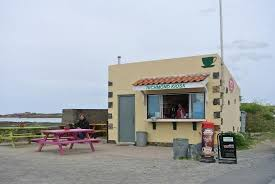 ‘Ned works seasonally at the local beach kiosk,’ says Ian, home educating dad of Ned who is sixteen. ‘His work involves long hours but he seems to really enjoy it, there’s a happy atmosphere there. We didn’t specify an amount that we felt was fair for him to contribute but we asked him to work out what he thought it cost to care for him each week over a whole year and then to give us what he thought was fair, considering the summer-time nature of his job too. I think he was genuinely shocked at how much money his personal upkeep requires and at first he just wanted to hand over his whole wage packet but then I reminded him that his earnings could also alleviate our costs in other ways – if he saved and bought his own skate board next time he wanted an upgrade, for example, that would save us the money, so after some thought he settled on giving us about a quarter of what he earns, saving half and spending the other quarter. He has so far bought a second hand bike and an accoustic guitar with his savings as well as paying for any gifts he has wanted to give. We’re really proud of him.’
Gaining work experience as a home educated child need not be too daunting. Ask other local HE parents for ideas, brainstorm with your child, search the local papers or post office notice boards for suitable part time hours. There’s no harm in offering some help at first – I trudged around many an hour on my daughter’s newspaper rounds, baby on my back, just to encourage and support her through tough times, but remember that part of the experience is the independence that springs from earning for themselves, not just being given something for nothing. The general rule seems to be that if they are asking about how to make money, then they are ready to try (within reason, I have a six year old who regularly presents me with plans to assault various village gardens under the delusion that people will pay him to dig up their perennials) and that it can be a wonderful chance to expand their freedom as home educated children and help them to gain a small appreciation of the value of work and money as well as boost their sense of independence and confidence in their own ability to pay their way.
© Melanie Crocker-Hulse