
SUBSCRIBERS’ HOME / FEATURES / NEW TO HOME EDUCATION? / PRACTICAL MATTERS / WEBSITES / RESOURCES / SEN / PLACES TO VISIT / SOCIAL LIFE / USEFUL INFORMATION / TUITION AND SERVICES / FROM YOU TO US
Sensitive children
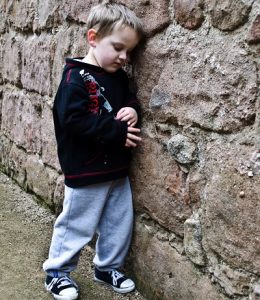
It is heartrending to hear about children whose spirit has been broken by forced attendance at school, and for whom the adventure of learning has degenerated into a joyless and seemingly endless ordeal. Many desperate parents of younger ones tell us that their children have been unhappy at school from the beginning. Parents tell us that the child has been labelled as ‘shy’ or ‘withdrawn’ and they feel that they are somehow to blame.
Getting ready for school
A child’s natural tendency to be either outgoing or reserved may become noticeable when they first attend preschool activities. There is increasing emphasis on ‘getting ready for school’ in early years settings and any perceived failure to conform is a matter of concern to staff.
Typically a ‘shy’ child is considered to be fearful, inhibited, suffering from low self-esteem and possessing poor social skills. This causes the parents to be anxious and they may attempt to force the child into social situations and into educational groups in a mistaken attempt to help them.
Shyness: a reassessment
Research by Dr Elaine Aron, a clinical psychologist and psychotherapist, provides a much-needed reassessment of the issue of shyness. Dr Aron’s work redefines shyness as ‘the expression of a sensitive individual’s innate preference to pause and observe before proceeding’. Dr Aron has studied the degree of sensitivity which individuals possess, and she explains that some sensitive people are completely overwhelmed by the amount of sensory information which they receive in certain situations. Sensory overload causes stress and the child’s instinctive reaction is to retreat from the source of the discomfort.
Dr Aron believes that such children have a highly developed nervous system which registers input which the average child simply does not notice. She explains that sensitive children need longer to process the information which is bombarding their senses before they can begin to interact and investigate.
Sensitivity: a prevalent trait
Dr Aron’s studies show that 15 – 20% of children are born with a highly sensitive temperament, and she observes that a trait which is so persistent cannot be considered to be abnormal. Sensitive boys in particular are at a disadvantage in our culture as there is a tendency to regard sensitive males as less successful than individuals who display more ‘macho’ tendencies.
The child may also find it very hard to tolerate certain types of noise and some smells which may be almost unnoticeable to adults. They may be ‘picky’ eaters who have certain food preferences which seem exaggerated but which cause them real distress, and they may suffer discomfort from the texture of particular clothes and textiles.
A gentle approach
It is very important to accept the child’s nature as it is and to resist the temptation to try to force them to get used to situations which cause them to suffer sensory overload. Home education may help sensitive children, allowing them to develop social skills at their own pace and enabling them to adjust gradually to a world that is at times overwhelming and unbearably intense.
Home education may help because it enables the parent to give the child some protection from the circumstances which cause them distress. Learning from home allows the parent to manage stressful situations; for instance, if parent and child are attending a social activity they may withdraw if the child reaches the limits of his or her tolerance.
Learning to relax and feeling safe
At home it’s possible to discover different ways of de-stressing a highly sensitive child and this is key to helping the child to manage his or her own environment later on. At school, pupils are trapped until home time and this knowledge may be unbearably stressful especially for a young child.
Making friends
Friendships are crucial but a parent’s assistance may be needed if the child has difficulty in overcoming the initial hurdle in social encounters. Sometimes gentle encouragement is needed, and the parent has far more knowledge and understanding of the child’s needs than a busy teacher who is looking after thirty other children amid the bustle and noise of the classroom.
The battleground of school
When they are at school, sensitive children face a battle on two fronts. In addition to the daily stress of survival in an environment which threatens to swamp them, the child’s heightened perceptions make them painfully aware of the continual negative suggestions from other people that they are ‘quiet’, ‘shy’ ‘too sensitive’ or ‘different’. They try to change and find that they cannot do so, and they feel increasingly isolated and ashamed. They need to be appreciated and understood. At home, parents may celebrate the child’s sensitivity in a positive way and respond to them with understanding.
‘If one could see inside the mind of a sensitive child,’ says Dr Aron, ‘one would learn the whole story of what is going on – creativity, intuition, surprising wisdom, empathy for others …’.
Further investigation
Dr Aron has devised a short assessment which helps parents to identify whether or not a child is highly sensitive. There is more on her interesting website at www.hsperson.com together with details of publications and information.