SUBSCRIBERS’ HOME / FEATURES / NEW TO HOME EDUCATION? / PRACTICAL MATTERS / WEBSITES / RESOURCES / SEN / PLACES TO VISIT / SOCIAL LIFE / USEFUL INFORMATION / TUITION AND SERVICES / FROM YOU TO US
Starting out: ideas for new home educators
New to home education? To help families with younger children, we have put together some ideas to help you to get started.
Home education does not have to be like school, and if you are helping the children with basic numeracy and literacy you have a good foundation upon which to build.
Adventures in numeracy
Children will benefit from lots of practical work in numeracy to reinforce abstract mathematical concepts. 
- You can play games including dominoes, dice and counting games (Ludo, for example), Trio and card games.
- Share out the sweets, cut up the cake into pieces, measure the children’s heights, the table, the floor, the bath… Weigh food (how many grams of toast are you going to eat for breakfast?) and weigh rubbers, small toys, the gerbil … all sorts of things.
- Estimate first, then compare your result: make a table and see how you scored!
- Learn about capacity by pouring and estimating … all you need is a measuring jug and some interesting liquids.
- Do lots of multiplying too … how many fingers and toes do we have altogether in our house? How many more when Granny is here?
- Make a big, colourful table square on card and put it on the wall to help with learning, once they have understood the basic principle of ‘times’.
- There are lots of reasonably inexpensive workbooks available in bookshops if the children enjoy doing them.
- Plastic coins are a source of all kinds of imaginative play and they can be very useful for teaching the concept of ‘borrowing’ in arithmetic.
Creative ways into literacy
Reading and writing may be practised naturally in all sorts of ways.
- Some children like to make little books for a younger friend or relative to enjoy. Help them to collect pictures from magazines and catalogues (or from internet image searches), stick each one on a piece of thin card and write a word, a short phrase or a couple of sentences underneath. Put them in a ring binder.
You could do some small projects on simple things that they enjoy, which might just involve drawing a picture on each page of an exercise book and writing a sentence (or more) about each picture. Here are some ideas to start you off:
- springtime (or any of the seasons)
- fish
- my favourite animals
- our town (or village)
- the beach
- insects in the garden
- the food I like
- my best toys
Visit your library and borrow lots of junior non-fiction books. There are books 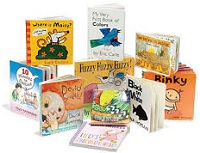 on everything under the sun. Read them together and the children will learn an immense amount without any effort. Invest in a children’s encyclopaedia and read them articles on their favourite topics. Leave it lying around and they will soon want to look at it.
There are many other things to do as well:
Collect clothes for dressing up. Look in your local charity shops.
- Add feathers, sequins, beads – anything to make them colourful and fun.
- Beg hats, ties, gloves, bow ties, scarves, beads and bangles from friends and relations.
- Make costumes out of old dresses, suits and so on.
- Have fun being different people!
- If space is a problem, limit your collection to as much as you can keep in an old suitcase under the bed and change the contents gradually.
Make big pictures to go on the wall. This is one example of a theme for a big picture:
- Think of an imaginary street and give it a name.
- Draw the houses, shops and so on which belong in the street.
- Who lives there? Draw the people and give them names.
- Get to know the people … what do they do? Do they have pets, hobbies, cars and bikes?
- Cut them out and stick them on the picture, and tell stories about them.
Grow plants on your windowsill: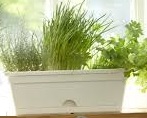
- Try cress if you haven’t much room.
- If you can accommodate some middle-sized flowerpots, try parsley, chives, dwarf tomatoes.
Play with magnets:
- You can usually get them cheaply from a toyshop.
- Find out what you can pick up with them and make a chart of things that are attracted to the magnet and things that are not.
- Find out about the cans in your kitchen. Which ones can be recycled?
- Play with a compass. Where is north?
Learn about the weather:
- Make a weather chart and symbols (there are some handy symbols here to print which are free for educational use)
- Keep weather records for a few weeks.
- Find out about the different kinds of weather and the conditions that cause them.
Make bread, scones, soup, cakes, biscuits …
Collecting things while you are out:
- Collect pine cones, interesting stones, bits of bark, shells, feathers, teasels, leaves and so on.
- Draw them; use them for modelling; spray or
 paint suitable objects when they are dry to make into decorations
 - Make a nature collection in a shallow wooden box.
Do cutting and sticking:
- Make mosaics, collages, birthday cards.
- Make dancing dollies (cut out from a concertina of paper).
- Look at pictures of Roman mosaics and find out how they made them; make some of your own.
Drawing and painting:
- Do drawing and colouring (thousands of free colouring pages on the internet).
- Make rubbings of textured objects with wax crayons or soft pencils and greaseproof paper.
- Make patterns – try using squared paper, isometric paper, dotty paper (many dotty pages to print here); then colour in the patterns
- Do wet paper painting (use thick paper, wetted – apply poster paint with a soft round art brush and let the colours run together – experiment with different colours – when it’s really dry, you can draw outlines or add details in a contrasting colour or with a felt-tip pen)
- blow painting (use thin paint on thick paper or card, and blow it into different shapes using a drinking straw)
- Printing – with potatoes, carrots, sponges, polystyrene bits, corks …
- Make masks, make puppets – act out simple improvised scenes.
Going out
Plan some visits to local places of interest that are within walking distance. There may be places that you haven’t explored as a family, or others which could be examined more closely: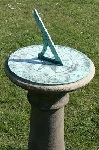
- Old churches and churchyards often have ancient tombstones, sundials, old glass and unusual items that some children find fascinating.
- Do some homework first so that you can point out the interesting bits.
Keep a note of all the things that you do including walks, visits, conversations, learning opportunities. Look back at it from time to time and it will suggest new ideas to you. Young children are like sponges as they soak up information and ideas all the time. Learning at home doesn’t need to be hard work for you or for them. The main thing is to be alert to all the possibilities for learning and to give the children as many interesting experiences as you can.